
NASA SWxC Website
My internship project for Summer 2024 was to design and implement webpages for each of the three new Heliophysics Division's Space Weather Centers of Excellence.

NASA Headquarters
Washington, D.C.
(Virtual Internship)
NASA Heliophysics Division
Space Weather Team
Project Background
NASA had recently selected three Centers of Excellence to serve as research centers for different facets of space weather studies. None of these centers had yet been given a dedicated page on the nasa.gov website, so I was tasked with working together with the principal investigator of each center as well as NASA's Space Weather team to design and implement pages for the Centers of Excellence.
Center for All-Clear Solar Energetic Particle Forecasts (CLEAR) at the University of Michigan
Space Weather Research and Technology Applications (SPARTA) at Boston College
Space Weather Operational Readiness Development (SWORD) Center at the University of Colorado Boulder
Background Research
Interviews
Before I began designing the webpages, I conducted semi-structured interviews with each of the principal investigators of the three centers.
In speaking with them, I was able to gain a sense of what each of the centers' goals were as well as what they might like to see featured on their NASA page.
First Iteration of Development
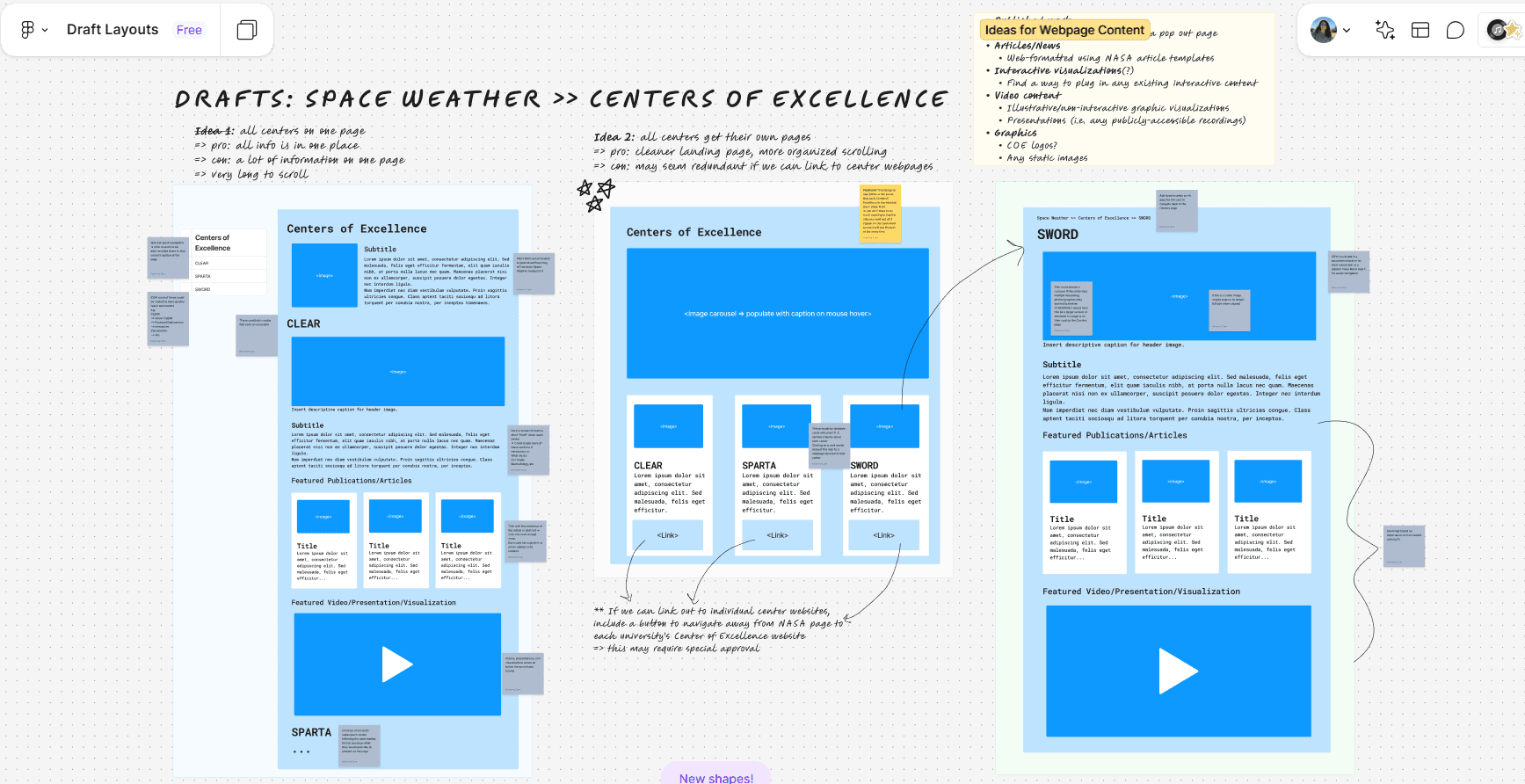
After the interview stage, I was able to take what I had learned to create a lo-fi draft layout of necessary sections for each page to share with the Space Weather team at NASA.
Additionally, I began crafting all of the web copy necessary for the pages using the information I had gained from my conversations with the Centers of Excellence.
Gathering Inspiration &
Iterative Design Process
NASA's CMS
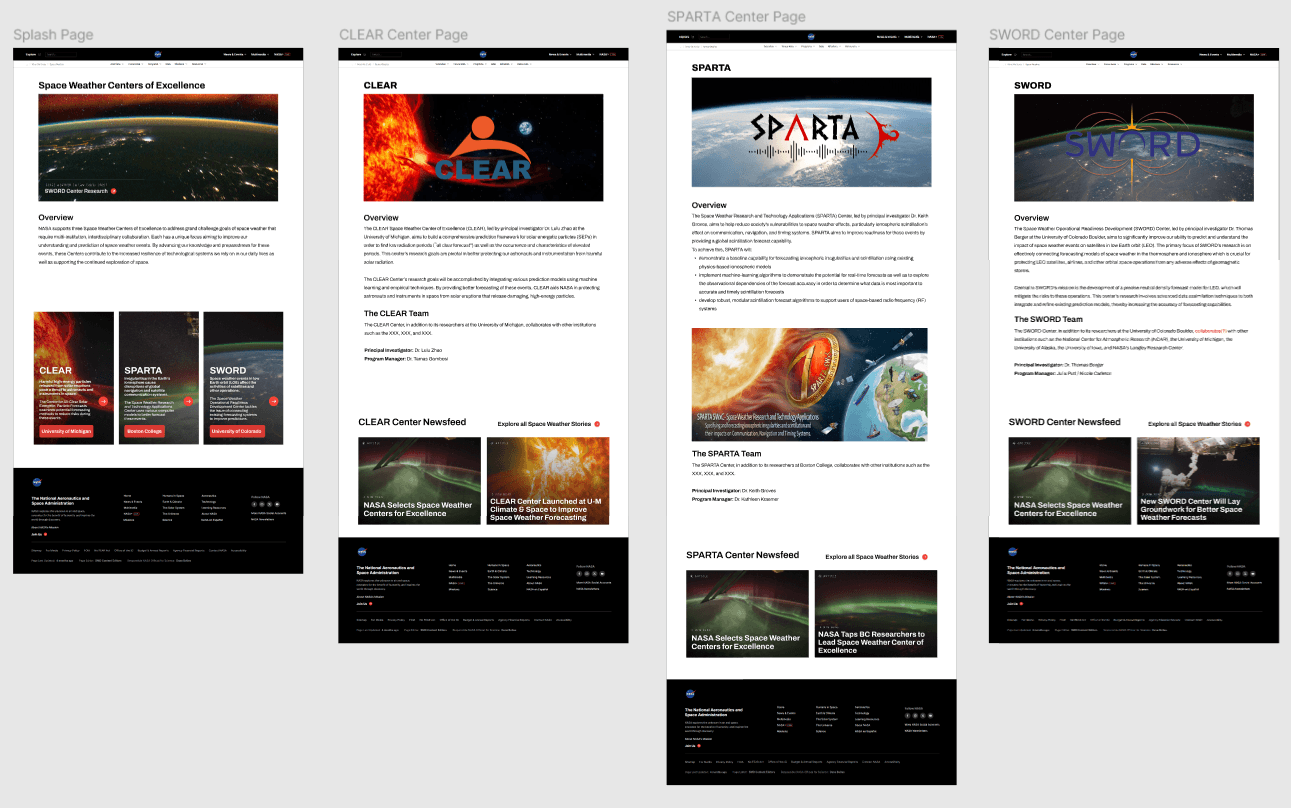
NASA has strict rules about how their brand is presented, including the structure of their webpages. I combed through the science.nasa.gov pages to identify flexible components that could be used on the SWxC pages.
Implementation
After gathering a sense of the design style and learning more about NASA's style guide, I was able to iterate on a higher fidelity draft of the SWxC pages that fell in line with what capability I held within NASA's CMS while still creating something specially designed for the Centers of Excellence.
Conclusion
After three months of iterative design and collaboration with both NASA Space Weather and all three of the Centers of Excellence, I gave my exit presentation detailing my design and implementation process to NASA's Heliophsyics Division, and the webpages are now published on science.nasa.gov.